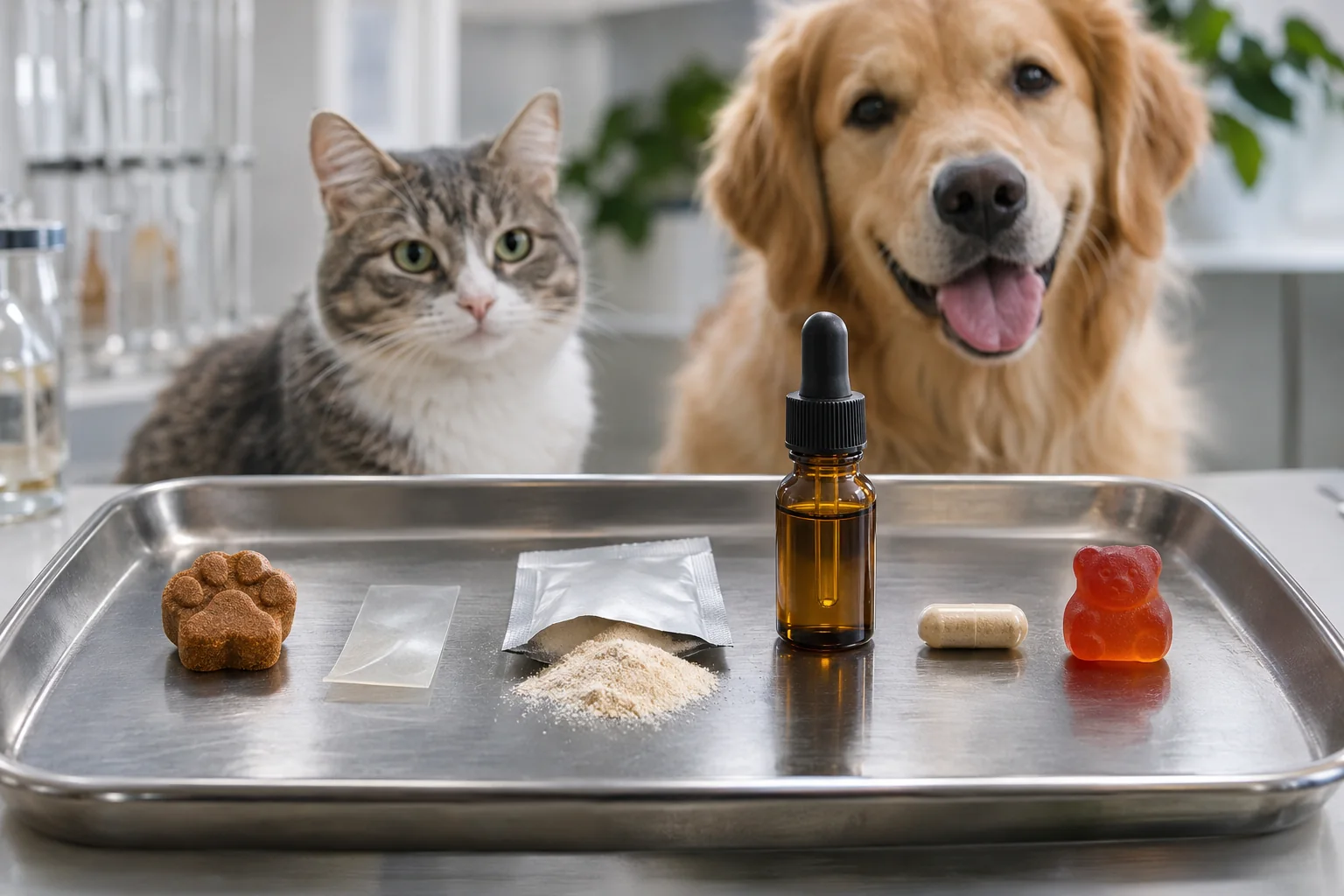






Put which animals the product is formulated and labeled for at the centre of the brief
Good OEM work becomes easier when a broad ambition is reduced to one decision that can be checked. Describe the finished product an owner will hold. Add species, life stage, serving and market, then specify which animals the product is formulated and labeled for. This keeps state species and life stage clearly connected to a real SKU instead of an abstract capability claim.
Record assumptions as assumptions
A brief can contain unknowns, provided they are visible. Mark each assumption and say how it will be resolved. Treat destination-market label requirements as a review frame, not as a substitute for the product file.
Ask for evidence that answers this exact question
Request species, age or life-stage statement and feeding directions in a format that preserves method, units, sample identity and date. Evidence becomes reusable when those details travel with the result.
Read documents in their proper role
Do not let a sample document become a standing product claim. Specifications, batch records and references each need an identified scope. Use destination-market label requirements only within the scope it actually covers.
Connect the formula to use, packaging and storage
Review the formula in the package and the package in the distribution route. A technically suitable ingredient can still create an impractical unit or an unstable opened pack.
Test the likely failure point
Write a challenge test or document check for using pet imagery as the only species indication. State what would count as an acceptable outcome before requesting the result, and keep any deviation in the decision record.
Carry the decision into quotation and release
Price comparisons become meaningful only when the quoted version is fixed. Identify formula, dose, unit, pack, quantity and included services, then list unresolved sampling, test and logistics work separately.
Questions for the production discussion
Finish with a decision log rather than a general recap. Capture the answer on which animals the product is formulated and labeled for, the remaining evidence and the point at which the team will review it again.
A useful enquiry includes
- Define which animals the product is formulated and labeled for for one product version
- Request species, age or life-stage statement and feeding directions
- Avoid using pet imagery as the only species indication
- Review the decision against destination-market label requirements
Business guidance for developing pet nutrition products. Individual feeding and health questions require veterinary advice.