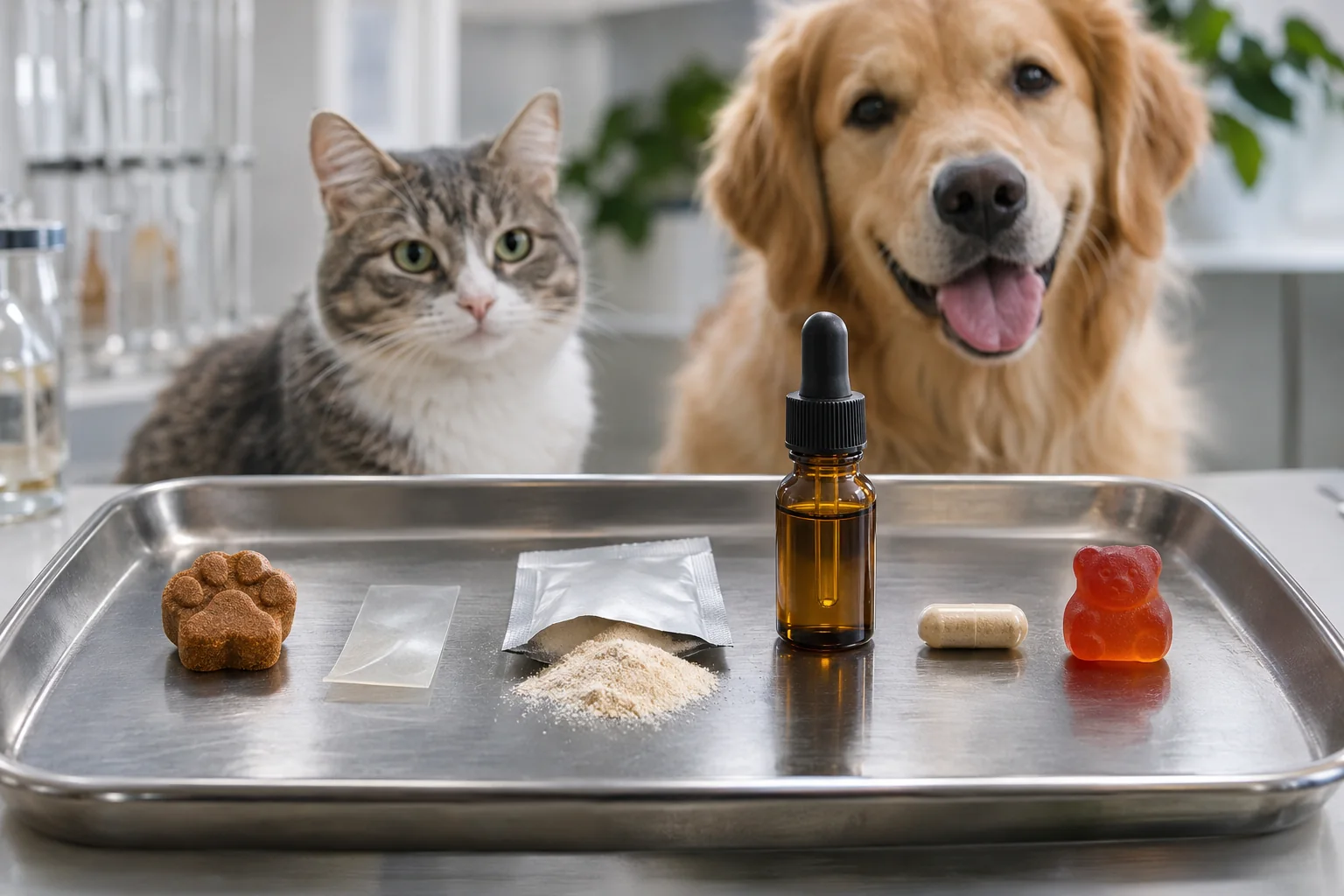







Put how much material must be offered to a low-body-weight animal at the centre of the brief
A useful project starts by naming the decision, the animal and the conditions in which the product will be used. Start with the use case rather than the ingredient trend. State the target animal, feeding routine, destination and how much material must be offered to a low-body-weight animal. For reduce serving burden for small dogs, these details decide what can be assessed and quoted.
Record assumptions as assumptions
Keep a visible line between available evidence and planned evidence. If format feasibility by target weight range affects the answer, state which part is being checked and avoid turning the reference name into a marketing badge.
Ask for evidence that answers this exact question
The evidence set should include dose range, unit dimensions and number of daily units. Ask for the version, lot, method and reporting basis. These fields allow a later reviewer to understand why the team accepted or rejected the proposal.
Read documents in their proper role
A specification is the rule used for acceptance; a COA records an outcome; a reference helps justify the rule. Keeping those functions separate makes format feasibility by target weight range easier to use without overstating it.
Connect the formula to use, packaging and storage
Check the interface between product and person: opening, dispensing, counting, resealing and storage. Small inconveniences can become dose variation or pack damage across repeated use.
Test the likely failure point
Build a review around scaling a large-dog unit only through label directions. Choose a representative product version and realistic condition, then record both the observation and the decision made from it.
Carry the decision into quotation and release
The commercial file should be specific enough for another team to reproduce the basis of price. Formula, serving, pack, language, order basis and optional services need explicit fields.
Questions for the production discussion
The final question is whether another reviewer could reconstruct the decision. Record the conclusion on how much material must be offered to a low-body-weight animal, its evidence and the next authorized change point.
A useful enquiry includes
- Define how much material must be offered to a low-body-weight animal for one product version
- Request dose range, unit dimensions and number of daily units
- Avoid scaling a large-dog unit only through label directions
- Review the decision against format feasibility by target weight range
Business guidance for developing pet nutrition products. Individual feeding and health questions require veterinary advice.