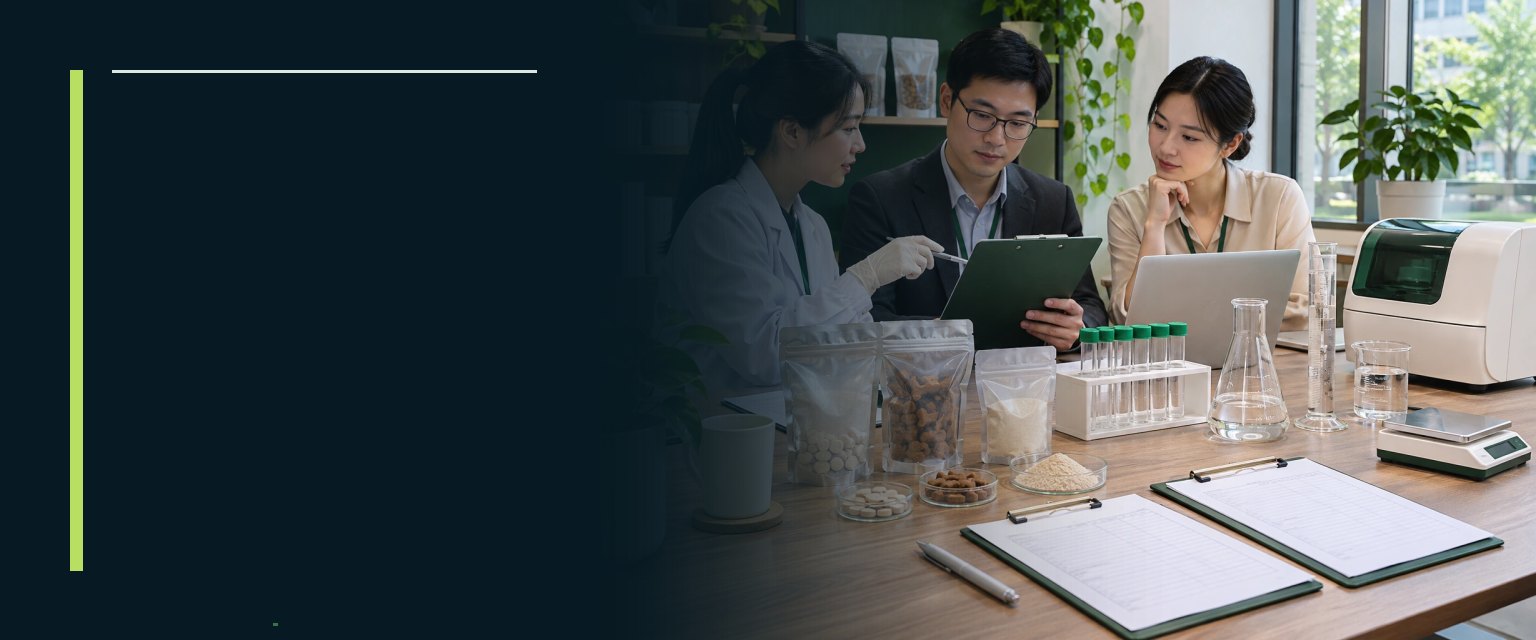

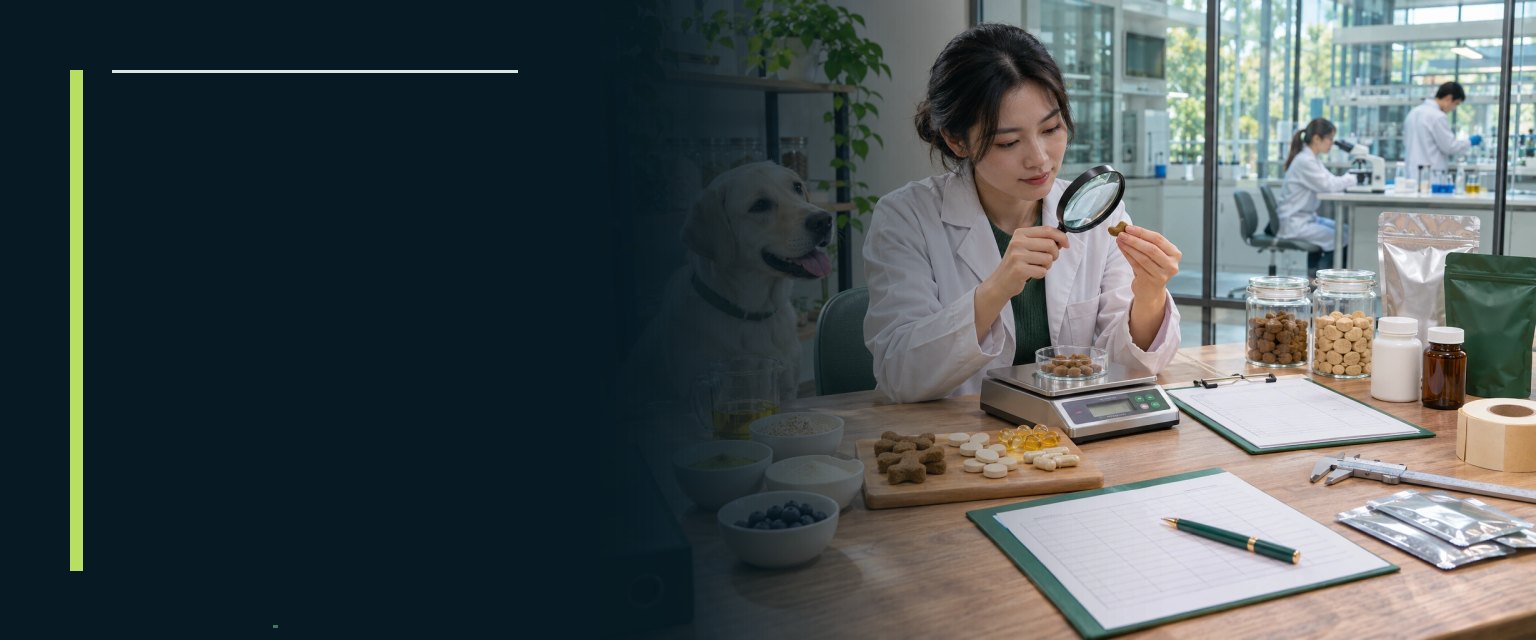
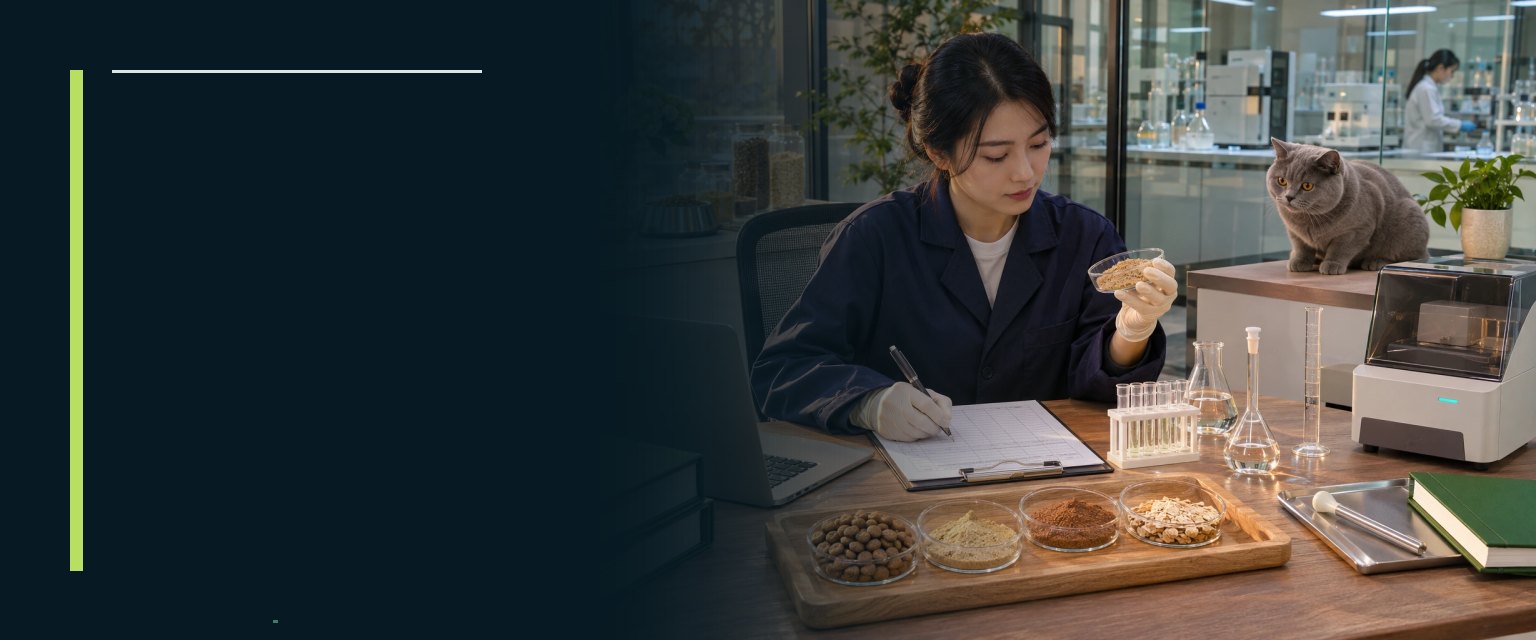
Put whether plant, grain or other raw materials create a relevant risk at the centre of the brief
A credible brief separates what is already decided from what still needs formulation, testing or market review. A marketable idea becomes an OEM task when its boundaries are explicit. State the species, routine, serving and destination, and make whether plant, grain or other raw materials create a relevant risk the main question for decide when mycotoxin testing belongs in the plan.
Record assumptions as assumptions
Use three labels in the working file: proposed, confirmed and open. Put an owner and review date beside every open item. Where risk-based raw-material and finished-product review matters, note the exact market question instead of pasting a broad compliance statement.
Ask for evidence that answers this exact question
Collect ingredient origin, supplier controls and defined analytes. Keep original units and identify the method and sample. Converting results too early can hide whether two values describe the same product basis.
Read documents in their proper role
Limits, results and scientific context should not share one unlabeled table. Keep them in their proper roles and show when each was reviewed. This discipline is particularly useful when working from risk-based raw-material and finished-product review.
Connect the formula to use, packaging and storage
Consider manufacturing and household handling together. Ingredient contribution, process tolerance, opening force, measuring step and storage after opening can all change the practical product design.
Test the likely failure point
Test the project against adding a broad claim of mycotoxin-free without a testing basis. Give the check a defined sample, condition and result format. A risk sentence with no test or document owner will be forgotten during artwork review.
Carry the decision into quotation and release
A controlled quote states the formula revision, unit specification, packaging configuration, order basis and services included. Anything still dependent on samples, third parties or freight should remain visibly provisional.
Questions for the production discussion
End with four written answers: feasible version, evidence still needed, approval owner and next hold point. Relate each answer to whether plant, grain or other raw materials create a relevant risk; avoid a meeting note that only says the project is progressing.
A useful enquiry includes
- Define whether plant, grain or other raw materials create a relevant risk for one product version
- Request ingredient origin, supplier controls and defined analytes
- Avoid adding a broad claim of mycotoxin-free without a testing basis
- Review the decision against risk-based raw-material and finished-product review
Business guidance for developing pet nutrition products. Individual feeding and health questions require veterinary advice.